Lamarckism is the first truly comprehensive theory of evolution. It was proposed by a French born biologist, Jean Baptiste de Lamarck (1744-1829). This theory is also called Inheritance of Acquired Characters and explains the origin of new species.
In 1809, Lamarck put forth a complete thesis of evolution in his master work and classic book Philosophie Zoologique. It is popularly known as Inheritance of Acquired Characters. This book included his theory explaining the changes that occur in the formation of new species. Lamarck still occupies a prominent
place in the history of evolutionary thought, though his evolutionary ideas are outdated. He was the first evolutionist to conclude that evolution is a general fact covering all forms of life.
The salient features of the Lamarckism are:
- species change under changing external influence,
- there is a fundamental unity underlying the diversity of species and the species progressively develops.
Lamarckism consists of four principles which are briefly discussed.
- Internal urge: The internal forces of life tend to increase the size of an organism, not only as a whole, but in every part as well up to the limit of their function;
- Direct environment and new desire: Each organ or part is the outcome of a new movement which in turn is initiated by a new and continuous desire or want. Thus, formation of a new organ (or part) becomes necessary to produce the newly desired movement;
- Use and disuse: The development of an organ is in direct proportion to its use. Continued use strengthens the organ little by little until its full development is attained, while disuse has the opposite effect, the organ diminishing until it finally disappears;
- Inheritance of acquired characters: All that has been acquired or altered in the organisation of individuals during their life is preserved and transmitted to new individuals who proceed from those who have undergone these change.

In support of his theory, Lamarck cited the following examples.
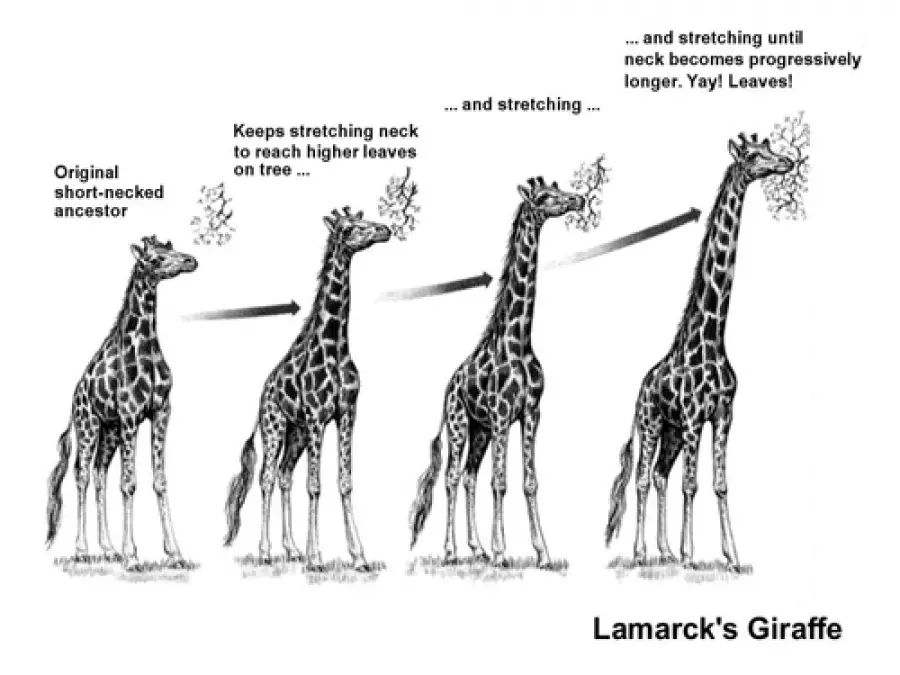
- The most frequently cited example of Lamarckism is that of the long neck of giraffe. An original deer-like ancestor of giraffe found the supply of grass and herbs inadequate. Hence the giraffes were forced to feed on the foliage of trees. In the process of reaching the leaves of higher branches, its neck got stretched and the forelegs were raised. This process of stretching the neck was continued for generations to reach the foliage of taller trees and resulted in longer neck leading to the origin of modern species.
- He explained the webbed feet of aquatic birds as being initiated by hunger (the need for food) driving the birds to swampy areas to seek food. In this environment the birds would have made efforts to swim by spreading their toes. In this process, the toes were spreading out generation after generation. The continued stretching of the skin between the toes gradually produced the webbed condition as an acquired characteristic that was then passed on to future generations.
- The origin of snakes was explained as a loss of limbs stemming from the habit of moving along the ground and concealing themselves among the bushes. This habit led to continued efforts to elongate the body in order to pass through narrow places and, as result, the animals acquired a long narrow body. Since long legs would have been useless and short legs would have been incapable of moving the elongated body, continued disuse finally caused total loss of limbs.
- The development of long legs in the wading birds through generations of sustained stretching to keep the body above the water level.
- Eyes are reduced in moles because they live underground. Since the cave is completely dark, the animals in the cave can not use eyes. So eyes become degenerated and in extreme cases eyes disappear completely.
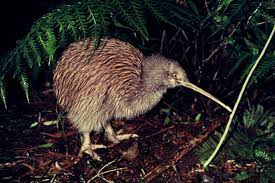
- The absence of wings in the non-flying birds. For example, Kiwi of New Zealand is believed to have descended from flying birds. When these birds reached New Zealand, they were able to fly. On settling down and availability of plenty of food and there were no enemies they did not find any need to fly. In due course of time, these birds lost their ability to fly and wings got degenerated.
- In blacksmiths, biceps muscles in the right arm are more developed because of their continuous use.
- Lamarck applied his theory to the human species as the human beings, for a series of generations were obliged to use their feet exclusively for walking purpose and ceased to use their hands as feet. Such quadrumana would undoubtedly be transformed eventually into bimana and their toes would no longer be separated or opposable since their feet would only be utilised for walking.
It is unfortunate that Lamarck had to give such unnatural explanations. It is indeed unfortunate again that Lamarck is best known for his incorrect theory of heredity by acquired characteristics. But one must remember that his concepts were set forth in the early nineteenth century, when the intimate structure of organisms as well as the true mechanism of fertilisation and sexual reproduction was as yet unknown. Although many of his arguments are unacceptable, the magnitude of his work and the brilliance of his hypothesis cannot be denied.
Criticism of Lamarckism
Lamarckism faced severe criticism and Lamarck had to defend them until his death. Some of the objections raised against the Lamarckian theory are as follows.
- The first principle on the tendency to increase in size is true in case of many organisms. However this is not universally accepted and there are instances to show reduction in size of the organs also.
- The second principle ‘new organs develop upon new desires’ is also not true. If every human being who desires to fly in the air should develop wings, but such is not the case.
- The third principle of Lamarckism, the use and disuse theory, has met with strong objections. If this theory is correct then the size of the eyes of a person should also increase with age who reads the books frequently. Again, we know it is incorrect.
- The fourth and final principle ‘the inheritance of acquired characters’has met with much contradiction.
- August Weismann (1890), the German biologist cut the tails of white mice for more than 20 generations and saw the consequence on the length of tail in the coming generations. In all generations the length of the tail was found to be normal. Hence, he believed that the acquired character was not inherited. Weismann differentiated the protoplasm into somatoplasm and germplasm. Somatoplasm is in the somatic cells (other than the sex cells). It does not play any role in heredity. Germplasm is the protoplasm in the sex cells. It plays an important role in heredity. He established that the changes occurring in the somatic cells acquired during the life time of the organism are not transmitted; only the changes that occur in reproductive cells i.e. the germplasm are transmitted.
- The boys of Jews and Muslims have been practicing the circumcision (cutting of the prepuce of penis) for the last several years. But the boys of both Jews and Muslims are born with normal prepuce.
- Chinese women wear iron shoes to keep their feet short for many generations. But the young ones are born only with normal feet.
- It is a practice among the ancient Indian women to pierce their ears to wear ornaments. If this is an acquired character then most of the Indian girls should be born with pierced ears. But this has not happened.
NEO-LAMARCKISM
A group of evolutionary biologists such as McDougall, Spencer, Cope, Packard, Kammerer, and Sumner etc. further studied and modified the Lamarckism. This modified version of Lamarckism is called Neo-Lamarckism. These neo-Lamarckians considered that adaptations are universal. Organisms acquire the new structures due to their adaptations to changed environmental conditions that affect the somatic cells. The variations caused in somatic cells can be inherited in the next generation. The Neo-Lamarckians provided examples in favour of inheritance of acquired characters.
The following are some of the evidences for inheritance of acquired characters.
- In order to prove the inheritance of acquired characters McDougall conducted experiments on rats. During his experiments, he used a tank filled with water and dropped the rats into it. The tank was provided with two exists, one exit was lighted and the other was dark. The lighted exit was provided with electric shock and the dark one without electric shock. The rats tried to escape through the lighted route which was provided with electric shock but could not. After repeated trials the rats learned to escape through the dark route. These rats were then bred and the offspring were given the same type of training. It appeared that the speed of learning was increased from generation to generation. Thus he concluded that the learning habit was inherited by rats.
- Kammerer did some experiments with Proteus anguinus, which lives in complete darkness. This amphibian is a blind and colourless. He observed in Proteus anguinus, the development of normal eyes and colour of the skin when exposed to day light. These somatic characters were inherited to the next generation.
- Griffith and Detleofson conducted experiments on rats by placing them on the rotating table for several months. Consequently, the rats slowly adapted to the rotating condition to the extent that even after the rotation stopped, the rats showed signs of dizziness. Then the offspring of these rats also exhibited dizziness and irregularity in gait. Then the scientists concluded that this is an acquired character and is inherited to the offspring.
- The white mice were exposed to the higher temperature say 20-30 degree C by Sumner. The body, hind limbs and tail of the mice increased in length. Further he observed that this character was transmitted to their offspring.
Neo-Lamarckism does not give any importance to factors like internal vital force, appetency and use and disuse of organs. The theory stresses on the direct effect of changed environment on the organisms. It established that only those modifications are transferred to the next generation which influence germ cells or where somatic cells give rise to germ cells.
Lamarckism was incomplete in itself and unable to explain all the cases of evolutionary changes, but holds good to certain extent because the body characters of the organisms are not single attributes but the result of interaction of heritable factors (genes) and the environment conditions.