In demographic studies, mating has a significant role in shaping the genetic structure of a population. Marriage in the Indian context shows a considerable variation among the different ethnic groups. Marriage between closely related individuals(sharing of common ancestors) ‘consanguineous marriage’ is one of the common types of marriages practiced in India since ancient times. India has a diverse culture; such type of marriage is observed very frequent in some communities, whereas it is considered taboo in some other communities. The consanguineous marriage is deeply rooted in the beliefs and socio-cultural norms of the society.
There are different forms of consanguineous marriages which are classified based on the magnitude of relationships. For example, a marriage between father and daughter, mother and son, brother and sister are considered highly consanguineous and incestuous marriage as it took place within the direct descendants. Moreover, there are other types of consanguineous marriages such as first-cousins marriage, second cousin marriage and uncle-niece marriage practiced in human societies. Among the different types of consanguineous marriage, cousin marriage is the most common type found with appreciable frequencies in India.
The term inbreeding is defined as the mating of individuals who have one or more biological ancestors in common. It means mating between genetically related individuals. The progeny of consanguineous parents is, by definition ‘inbreed.’ Inbreeding is the outcome of Consanguineous marriages. The term consanguineous is more qualitative and often used in anthropology and social sciences in terms of describing marriage patterns. It describes the relationship of individuals through marriages. However, it is also used in studying human population genetics for its significant contribution in shaping the genetic structure of a population. On the other hand, inbreeding is more quantitative and often use in clinical genetics, describing the degree of biological relationship and consanguinity between the parents and their offspring. Inbreeding is departures from random mating and genetic consequences of consanguineous marriages increases the degree of inbreeding. In other words, inbreeding is considered to be the genetic consequence of consanguineous marriage. It has shown adverse outcomes on reproductive history, morbidity, and mortality in infancy. Moreover, it also has shown significant impacts on physical and mental disadvantages among the childhood and adulthood periods.
CONSANGUINITY
Definition of Consanguineous Marriages
The term consanguineous is originated from the Latin word ‘consanguineous’ meaning ‘of the same blood’. It is defined as the biological relationship of individuals characterized by the sharing of common ancestors. Therefore, we can say that two individuals are consanguineous if they have at least one common ancestor. In simple words, consanguineous marriage is those marriages that take place between closely related individuals. We are all human beings to some extent, consanguineous as we are descended from a common ancestor.
The consanguineous marriage is practiced in different societies at different degrees. The custom of consanguineous marriages in India could be traced back to several centuries (Rao et al., 1975). In some societies, consanguineous marriages have been encouraged, for example, in Egyptians and Incas favoured unions of brothers and sisters of the reigning dynasty to maintain ‘royal blood’ in the family. In India, consanguineous marriages are practiced by different communities. However, reasons for practicing such marriages are varied from one community to the other. It is generally associated with the strengthening of family ties and socio-economic purposes. Moreover, it is also practiced to maintain the purity of blood in the royal family members.
Types of Consanguineous Marriages
Consanguineous marriages are of different types, which can be categorized based on biological relationships. Such relationships can be expressed in terms of degrees. Marriage between an individual with parents (mother or father) or with full sibs (brother or sister) is called first-degree relationship. Such type of biological relationship such as father with daughter, mother with son, and sister with brother is generally considered as incest taboo by most of the societies.
The biological relationship between an individual and his or her sib’s offspring is called second-degree relationship. It is represented by uncle-niece marriage. Such a relationship could be in between brother with brother’s daughter, brother with sister’s daughter, sister with sister’s son, and sister with brother’s son.
The other form of consanguineous marriage is between the first cousins, and it forms the third degree of biological relationship . It is followed by different levels of relationships such as fourth degree (second cousin, ), fifth-degree, and so on.
In case of third-degree relationship i.e. first-cousin marriage, there are four possible types of marriages of a person such as to father’s brother’s daughter (FBD), to father’s sister’s daughter (FSD), to mother’s brother’s daughter (MBD) and to mother’s sister daughter (MSD). The FSD and MBD are called cross-cousin marriages whereas the FBD and MSD are known as parallel cousin marriages (Bittles, 2002).
INBREEDING
Definition
The term inbreeding is defined as the production of offspring as a result of a mating between closely related individuals. Closely related individuals are those individuals who are having common biological ancestors. Therefore, the progeny of consanguineous parents is, by definition, inbred. Inbreeding is the genetical outcome of consanguineous marriage. In most societies, marriage regulates mating pattern, and consanguineous marriage leads to inbreeding. Inbreeding increases the degree of homozygosity to the offspring and also the expression of recessive traits.
Inbreeding Coefficient
The genetic relationship of individuals can be measured or quantified by using standardized mathematical formulae. In general, the genetic relationships can be measured by two basic measures, such as the coefficient of relationship (r) and coefficient of inbreeding (F). The term ‘coefficient of relationship’ was introduced by Sewall Wright in 1922. It measures the degree of consanguinity between two individuals. In other words, it is the proportion of genes identical by descent, which is shared by two individuals. It is calculated by using the following formula:
coefficient of relationship (r)
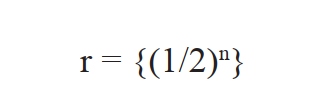
Where n is the number of steps apart between two individuals through their common ancestor. For example, the coefficient of relationship (r) of two individuals (A and B) who are related as first cousins can be calculated as follows:
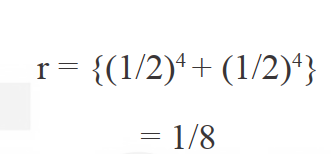
Since the total number of steps (n) from A to the other person B through their common ancestors is 4 as both A and B share two common grandparents.
The coefficient of inbreeding (F) is defined as the proportion of gene at which an individual of consanguineous mating is homozygous by descent. Generally, it is calculated by using the following formula:
coefficient of inbreeding (F)
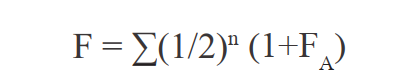
- Where ∑ is the sum of all paths in the relationships through common ancestor;
- n is the number of individuals in the relationship path connecting the parents of the individual;
- FA is the inbreeding coefficient of ancestors.
Generally, the coefficient of inbreeding (F) is half of the coefficient of relationship (r). For example, the coefficient of relationship of incestuous relationship (such as in between father-daughter, mother-son, or brother-sister) shares half of their genetic materials (r=0.5). Therefore, any siblings of such incestuous parents would be homozygous at 1/4 of gene loci (F=0.25). In the case of uncle-niece marriage, both the parents share 1/4 of their genetic components, and hence, the coefficient of relationship (r) is 0.25. On the other hand, the coefficient of inbreeding in their progeny will be half of the coefficient of relationship (r) i.e., F=0.125. Measure of relationship of individuals in terms of consanguinity that is coefficient of relationship and coefficient of inbreeding of different levels of degrees are shown in table 10.1
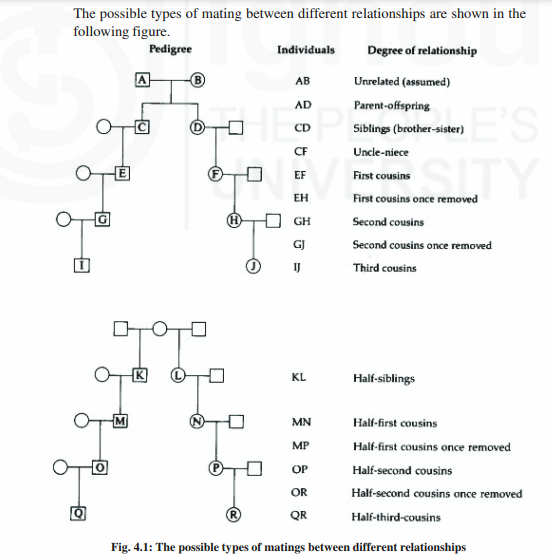
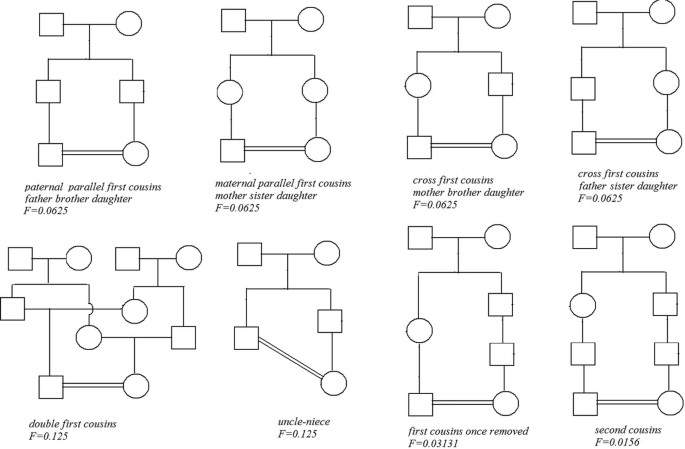
Table 10.1: Relationship of individuals in terms of Consanguinity
| Biological Relationship | Genetic Relationship | Coefficient of relationship (r) | Coefficient of inbreeding (F) |
| Incest | 1st Degree | 0.5 | 0.25 |
| Uncle-niece | 2nd Degree | 0.25 | 0.125 |
| First cousin | 3rd Degree | 0.125 | 0.0625 |
| First cousin once removed | 4th Degree | 0.0625 | 0.0313 |
| Second cousin | 5th Degree | 0.0313 | 0.0156 |
| Second cousin once removed | 6th Degree | 0.0156 | 0.0078 |
| Third cousin | 7th Degree | 0.0078 | 0.0039 |
Biological Consequences of Inbreeding
- Inbreeding is associated with both favourable and unfavourable biological consequences.
- Studies have reported that consanguineous mating have reduced the rate of intrauterine mortality and also lowered the rates of incompatibility between the mother and foetus. Studies have also shown positive correlation between fertility and consanguineous mating.
- On the other hand, consanguineous mating also has many adverse health outcomes. Inbreeding has increased the rate of homogeneity among the population, which results in the expression of various deleterious recessive traits. There are numerous examples of recessive traits expressed among the offspring of consanguineously married parents. Some of the common examples of recessive traits expressed among the newborn babies of consanguineous parents are hydrocephalus, albinism, six fingered dwarfism, tay-sachs, alkaptonuria, cleft lip, and cystic fibrosis. The burden of genetic disorders increase particularly among those societies where consanguineous marriages are culturally accepted. In general, it is a consensus that the progeny of consanguineous parents has a higher rate of postnatal mortality and morbidity. Different studies have also demonstrated a significant positive association between consanguinity and early mortality (Fareed et al., 2017).
- Inbred offspring have a higher chance of carrying double dose of a gene inherited from the consanguineously married couple. Carrying of such double dose increases the frequency of recessive trait, which required two copies of allele to express, in the population. Closely related individuals have a higher chance of carrying the same allele than less closely related individuals. Consanguineous children are more frequently homozygous for various alleles than the children of non-consanguineous parents. Children of consanguineously married parents experience several genetic disorders. Consanguinity has social significance in some of the population. However, it has some side effects on the individual as particular and the population as a whole from genetic points of view.
Theoretical Consequences
Short-term and Long-Term effects: Effects of inbreeding in a population as a result of continuous practice of consanguineous marriages can be of short term effect, or it can be long-term effect. In the short-term effect, inbreeding increases frequency of homozygosity in the population, and simultaneously, decreases in heterozygosity. Presence of homozygous genotypes enables the expression of recessive traits that were dominated by the dominant allele. Expression of such recessive traits, if deleterious in character, then inbreeding will result in decreasing fitness level. Moreover, inbreeding will also increase in both genetic and phenotypic variability within a population. However, the frequency of recessive homozygous trait will be decreased when the above population continued to practice consanguineous marriage over a period of generations at a constant rate. For example, if the homozygous genotype is deleterious then it will cause premature death before attaining reproductive age. Therefore, the expression of deleterious traits might be lost from the population due to the process of selection. Hence, continuous inbreeding in a population over a long period of generations reduces the frequency of deleterious alleles as a result of long-term effects.
Genetic load: Genetic load is defined as the measure of the extent to which the average fitness of a population is decreased. In other words, genetic load measures the rate of damage caused by the presence of certain deleterious genes in the population. According to Crow (1958), genetic load is the relative decrease in the average fitness of a population if all individuals in that population had the genotype that has the maximum fitness. It also measures the total number of disadvantageous genes present in a particular population. The genetic load may be caused by different factors that are based on the types of load that decrease the average fitness of the population. Some of the important types of load includes mutational load (caused by the presence of deleterious mutation in the population); segregation load (caused by the segregation of homozygotes over the heterozygote); recombination load (caused by breakup of favourable gene through recombination); drift load (it is caused by increasing unfavourable allele frequency in small population); and migration load (caused by adaptation to new environment by immigrants). The deleterious or disadvantage gene reduces the fitness level of the population by causing morbidity, mortality, and sterility. It could happen in two ways, such as may be in heterozygote condition (when the deleterious gene is dominant in character) and in homozygous condition (when the deleterious gene is recessive in character).
Studies on Inbreeding Effects in India
In India, various studies have been conducted to understand the effects of inbreeding on consanguineous offspring. Studies have reported that there is a significant decrease in anthropometric variables (birth weight, length, head circumference) and gestational period of newborn babies of the consanguineously married couple than non-consanguineous union (Badruddoza, 1998).
- The mean birth weight, length, head circumference, and gestational period of the babies born to consanguineous couples were significantly lower than non-consanguineous offspring.
- Congenital birth defects have also been diagnosed among the inbred offspring.
- Inbreeding increases the mortality rate and serious congenital disabilities, particularly among the incestuous progeny.
- In most of the consanguineous marriages, the women were reported to be very young and hence become mothers at a very young age group. It results in gynaecological immaturity and affected both mother and children.
- Inbreeding may also lead to decline in reproductive and survival rates as a result of increase in expression of rare homozygous recessive traits. Such a condition is known as inbreeding depression.
- It is also evident that there is increase in numbers of miscarriages or stillbirths among inbred mothers (Bittles, 2001).
- Studies have also reported that postnatal mortality and infant mortality (early first year) is common among the offspring of consanguineously married couples than the mortality in non-consanguineous union (Hussain et al. 2001).
- It could be possibly due to the expression of deleterious recessive genetic traits. Moreover, the infant mortality rate is reported to be highest among the consanguineous offspring, particularly in developing countries.
- Cognitive impairment is another typical example of child morbidity among the consanguineous offspring (Fareed and Afzal, 2014). Moreover, such consanguineous children are also found to have low IQ levels, and intellectual and development disability (IDDs) while comparing with non-consanguineous children (Durkin et al., 1998).
Some of the effects and autosomal recessive disorders commonly observed among the consanguineous offspring are shown in the following table 10.2.
Table 10.2: Studies on biological consequences of Inbreeding in India
| Author, Year | Population/State | Associated Disease/Effect | Brief Description of the Disease/Effect |
| Basu, 1975;Basu and Roy,1972 | North Indian Muslims | Fertility and Mortality | Fertility rate was higher among the consanguineous marriage than non-consanguineous; with highest mortality rate (below 21 years)among first cousins consanguineous marriage |
| Kulkami et al.,1989; Jain etal., 1993 | AndhraPradesh; Pondicherry | Neural tube defects; Congenital development disorders | It is a severe form of congenital disabilities of the brain and spine which happen in the early stage of pregnancy |
| Verma et al.,1992 | Pondicherry | Miscarriage | It is the loss of the foetus before attaining the 20th week of pregnancy. Generally, it happens in the first three months of pregnancy |
| Jain et al.,1993 | Pondicherry | Mental retardation | It is an intellectual disability disorder characterized by a delay in cognitive development. |
Sometimes, it is difficult to understand the influence of inbreeding on fertility and mortality since they are also dependent on non-genetic factors, such as maternal age and birth interval. There are several non-genetic variables that influence it. The prevalence rates of genetic disorders among the progeny of consanguineous parents in India are unrepresentative of the actual affected cases because there is paucity of state-level data for all the types of genetic disorders, particularly from rural populations. Moreover, there is paucity of literature on the possible effect of consanguinity on adult-onset of diseases in India. There are some preliminary literature reporting increased risk of breast cancer and premature coronary heart diseases are more prevalent among the inbred adults. In brief, inbreeding has become one of the strong predictors of the onset of different genetic disorders in both infant and adult populations.
Relevance of Inbreeding in Indian Population
(a) Geographical Variation
- Consanguineous marriages are practiced in different forms to a greater or lesser extent among most of the religious and ethnic groups living in India (Sanghvi, 1966). Inbreeding, the genetical consequences of consanguineous marriage is prevalent in most of the states at different degrees. The rate of consanguineous marriages varies on various factors such as geographical location, religion, caste, tribe, language, socio-economic status, education, culturally isolated, and population size (Basu, 1975; Rao, 1984). According to NFHS (2015), fourteen percent of marriages in India are consanguineous marriages, which are more common in all of the southern states except Kerala. The people of Kerala practice strict avoidance of consanguineous marriage. The highest frequencies of inbreeding population as a result of consanguineous marriage are reported from south India. About one-third of women in Tamil Nadu, Lakshadweep, Andhra Pradesh, and Telangana reported being in consanguineous marriages. Pondicherry records the highest level of consanguineous marriage (uncle-niece) in a single generation, with 54.9% (Puri et al., 1978). They have a long tradition customary of the first-cousin union that is between a man and his maternal uncle’s daughter (Sastri 1976). In simple words, it is the mating between a man and his mother’s brother’s daughter. One of the primary reasons for high rates of consanguineous marriages in south India is a means of ensures the maintenance of their property. It is a common belief that marriage between known and close relatives will helps in strengthening the family ties socially and economically. Moreover, consanguineous marriage is also practiced in order to minimise the dowry in some societies.
- There is a wide variation in inbreeding levels within the northern and southern states in India. The consanguineous marriage is preferential among the South Indian population whereas it is prohibited in most of the North Indian population.
- According to NFHS 4 (2015-16), Tamil Nadu and Lakshadweep record the highest level of inbreeding, reaching up to 33% in India. Arcot district of Tamil Nadu practices the highest frequency of consanguineous marriage in the state. The rate of inbreeding decreases when we move from southern states to northern states. Most of the northern states of India record up to 10-12% of inbreeding except Jammu and Kashmir, which reach up to 20% (before separation into union territory in the year 2019). The least frequency of inbreeding in India is recorded from Dadra & Nagar Haveli in western India whereas, Mizoram in the eastern side with only 1.4% and 1.9%, respectively. Among the different forms of consanguineous marriages, the uncle-niece marriage is most common in south India. Uncle-niece marriages are practiced in high proportions, particularly in the coastal areas of southern India. When we look into the levels of ethnic group, the Dravidian have the highest frequency of consanguinity when compared with other ethnic groups that is the Indo-Aryan, Indo Scythain, and Mongoloid ethnic groups (Saheb and Bhanu, 1984)
(b) Social and Religious Variation
- The types of consanguineous marriage practiced by the different religious groups were found to vary. In terms of religious affiliations, Christians showed the lowest rates of inbreeding as there is a strict restriction in close-kin marriage in Christianity. And, the highest rate was recorded among the Muslim population. The frequency of inbreeding is reported to be high among the Asna Ashariya, Shiekh Sunni, Dawoodi Bohra, and Muslims of Delhi and West Bengal (Basu and Roy, 1972; Basu, 1975; Rizvi and Buzarbarua, 1993). The inbreeding coefficient among Hindus in Tamil Nadu is as high as that found in Andhra Pradesh. In Madhya Pradesh, the Muslim community practices the highest rate of consanguineous marriage, and it is comparatively low among the Hindus (Goswami, 1970)
- According to the NFHS 4 (2015-16), the Muslims (19.8%) and Budhist (19.3%) are found to have the highest rate of consanguineous marriage than the other religious groups. Christians and Hindus also represent high frequencies of consanguineous marriage with 16.6% and 13.5%, respectively. The lowest incidence of consanguineous marriage among the major religious groups is represented by Sikh (4.4%). The remaining small religious groups in India constitute 11.4% altogether . Using words ‘major’ and ‘small’ religious groups are classified truly based on the size of the population compared to the whole Indian population. And, the scheduled castes, Harijans, and Christians are in intermediate between the Muslims and Hindus (Goswami, 1970).
- Regarding different categories of the Indian population, the rate of consanguineous marriage is observed to be highest among the other backward class (15.1%). It is followed by scheduled caste (14.6%) and schedule tribe population (13.5%). Scheduled tribes have moderate inbreeding levels in general. But, the tribal population of north-east India shows meagre inbreeding rates compare to other parts of India. The ‘others’ category of the population which are not included in schedule caste, scheduled tribe, and other backward class comprises of 12.8% who practices consanguineous marriage.
- When we talk about the practice of various types of consanguineous marriages in India, in general, three types of consanguineous marriages were reported, such as first-cousin, second-cousin, and uncle-niece. The most common type of consanguineous marriage was marriages to first cousins. The first cousin marriage is practiced by most of the religious groups of India. It is highest among the Muslims (13.3%) followed by Budhist (11.5%), Christian (10.3%) and Hindus (8%). The most preferred form of first cross-cousin marriage is maternal uncle’s daughter. The majority of the Hindus practice matrilateral cross-cousin marriage, whereas other types of first-cousin were frequent among the other religious groups. For example, Irula of Tamil Nadu has practiced high frequencies of first cross-cousin marriage (43.98%). The different four types of first-cousin union such as to father’s brother’s daughter (FBD), to father’s sister’s daughter (FSD), to mother’s brother’s daughter (MBD) and to mother’s sister daughter (MSD) are observed among the Muslim communities (Bittles, 2002). The other types of consanguineous marriages, such as second cousin and, uncle-niece are practiced in fewer frequencies irrespective of religion (Figure 10.4). Concerning to different categories of class, other backward class population shows the highest prevalence (9.6%) when compared with scheduled caste (8.8%) and scheduled tribe categories (7.4%) for first-cousin form of consanguineous marriage in India.
Some classical examples of Inbreeding and its deleterious effect
(a) European Royal Families : Inbreeding was very common among the royal families of Europe, and it has been linked as the cause of the widespread number of cases of hemophilia in the families. The presence of hemophilia in the royalty of Europe started with Queen Victoria of England. Victoria is thought to be the original carrier for the recessive X-linked hemophilia gene, which lead to over twenty members of royal families inheriting the disease in just over 100 years. No ancestor of Queen Victoria showed any evidence of hemophilia, so several theories arose on the gene’s origin. One theory is that Victoria was the victim of a mutation that could have been due to years of inbreeding in British royalty. Another interesting theory is that Victoria’s mother had an affair because of the intense pressure of producing an heir, and the Edward Duke of Kent was not Victoria’s biological father (Stevens 1991).
(b) Study on Japanese Children after WWII : Shortly after the United States dropped two atomic bombs on Japan in World War II there was an increase in the number of consanguineous marriages in the areas surrounding Hiroshima and Nagasaki. The most common union was seen to be inbreeding at the first-cousin level. The study was set up to study some of the possible effects of inbreeding. The five effects of inbreeding looked at in this study was: the fertility of the marriages, the mortality of the offspring, the morbidity of the offspring, the reproductive performance of the offspring, and the characteristics of the offspring. In the study, it was seen that inbreeding did not have an adverse effect on the fertility of the marriages, but there were some significant increases seen on childhood mortality in the first year of life. Inbreeding also increased morbidity in the study. There were significant increases in levels of handicapped offspring associated with inbreeding (Schull 1965).
(3) The Hutterites : The Hutterites are a small group of Anabaptists that fled Europe and Russia and settled in what is now the Dakotas and Canada to escape from religious persecution. The Hutterites settled on communal farms, which isolated them from outside populations. Their isolation along with their beliefs leads to a highly inbred population. Moreover, the Hutterites are a good population to study because, like the Amish, they keep very detailed genealogical records. The Hutterites are also among the most fertile populations that commonly practice inbreeding (Ober 1999).
Inbreeding Depression
- Biologically, inbreeding has many harmful effects on the offspring. They may be homozygous for certain lethal genes. In this way, reduced biological fitness in a given population as a result of inbreeding is known as Inbreeding depression. Many studies have demonstrated reduced survival and fecundity of inbred young (Wright 1977; Ralls and Ballou 1983, Sausman 1984, Templton and Read 1984). Biological fitness refers to ability to survive and reproduce. Inbreeding depression is often the result of a population bottleneck. A population bottleneck is a sharp reduction in the size of a population due to environmental events such as earthquakes, floods, fires, disease, droughts, human genocide etc. Such events can reduce the variation in the gene pool of a population. After an incident, a smaller population with few individuals, with a correspondingly smaller genetic diversity, remains to pass on genes to future generations of offspring. Such reduction population size results in the loss of genetic variation. The robustness of the population is reduced; the ability of the population to survive is also reduced. In other words, the higher the genetic variation or gene pool within a breeding population, the less likely it is to suffer from inbreeding depression.
- Mechanism responsible for inbreeding depression is the fitness advantage of heterozygous, which is known as over dominance. This can lead to reduced fitness of a population with many homozygous genotypes, even if they are not deleterious. Here, even the dominant alleles result in reduced fitness if present homozygously.
- Inbreeding can increase an individual’s inclusive fitness by producing young that share more of its genome. Thus, when inbreeding has little or no genetic cost, there should be strong selective advantage for inbreeding as well as recognition and cooperation among kin (Wilson 1976, May 1979). The cost of inbreeding is therefore of theoretical importance as well.
- Calculation of the total cost of inbreeding in natural population would involve considering the effects of inbreeding on several components of fitness. In small populations of randomly mating individuals, all may suffer from inbreeding depression because of the cumulative effects of genetic drift that decrease the fitness of all individuals in the population. Inbreeding depression may potentially be reduced, or purged, by breeding related individuals. There can be several lethal consequences of inbreeding which include mortality, morbidity and even it may lead to extinction.
- Inbreeding depression in humans seems to be highly uncommon and not widely known, there have been several cases of apparent forms of inbreeding depression in human populations. Charles Darwin through numerous experiments, was one of the first scientists to demonstrate the effects of inbreeding depression. Charles’s wife, Emma was his first cousin. He attempted to study the theory of inbreeding within his own children (Bittles 1991). Out of ten children, three died before the age of ten. Of the rest, three had child-less long-term marriages.
- A study has provided the evidence for inbreeding depression on cognitive abilities among children, with high frequency of mental retardation among offspring in proportion to their increasing inbreeding coefficients (Fareed and Afzal, 2014a). The depression on growth parameters (height, weight and body mass index) due to inbreeding among children has revealed the significant increase in underweight cases with increasing inbreeding coefficients (Fareed and Afzal, 2014b).
Reasons of Inbreeding
- Studies have shown that in many societies consanguineous marriages predominate. In fact, in many large populations of Asia and Africa twenty to fifty percent of all unions are that of consanguineous marriages (Bittles 1991). There are several circumstances that would give a population a reason to practice inbreeding at a large scale. Some of these reasons for practicing inbreeding include royalty, religion and culture, casteism, socioeconomic class, geographic isolation and small population size.
- Religion, culture and casteism can play a large role in the amount of inbreeding that takes place in a population. In many Muslim and Hindu societies in Africa and Asia consanguineous marriages, especially unions of first cousins, account for twenty to fifty-five percent of the total. These religions tend to inbreed because of religious acceptance, preference, and tradition. In many Indian tribes, the cross cousin marriages are one of the preferential marriages. Moreover, the culture of these societies also plays a large role to increased levels of inbreeding. Consanguineous marriages are thought to be an advantage when considering compatibility of the bride and her husband’s family. This is particularly important when discussing the bride’s relationship with her mother-in-law and the up-keep of the family’s property. Another incentive to close relative marriages concerns bride wealth and dowry. Consanguineous marriages can lead to greatly reduced or no payments at all in unions of this culture. This allows small landowning families to keep their property and land (Bittles 1991).
- Other groups that are associated with inbreeding because of religion and culture are the small Anabaptist populations in North America. These groups include the Amish, the Mennonites, and the Hutterites. These groups settled in North America in the 18th and 19th centuries in search of religious freedom. These populations have shown increases in consanguineous marriages over time, and reached to 85% in the 1950’s. The reason for the high levels of inbreeding is not only due to religion; it can also be attributed to the small isolated farming communities in which these populations find themselves. These factors of religion and small communal societies lead to limited choices when searching for possible mates (Agarwala 2001). Studies show that inbreeding levels can depend largely on geographic, demographic, social, and economic factors (Fuster 2001). Furthermore, numerous other studies have shown that socioeconomic status can have a large impact on the level of inbreeding. In many cases the poorest and least educated members of a community tend to have the highest inbreeding levels in a population (Bittles 1991) Inbreeding has also been seen to occur frequently in many royal families. Royal incest was commonly found in Ancient Egyptian, Incan, Hawaiian, and many European royal families. Brother-sister unions become more frequent when royalty is the major factor concerning the incidence of inbreeding. There are several factors that can explain why royalty leads to high levels of inbreeding. One factor is that the king has limitless power in many cultures, and he can do what he wants and marry who he wants. Also, in many cases inbreeding is practiced in royal families to preserve royal blood lines. Another explanation is that a royal family can keep land, material possessions and resources within the family. Moreover, brother-sister royal incest allows succession of the throne to both a male and female blood line. There are also cases in which royal incest is part of a culture and is sometimes linked to legends or myths. One of the best documented cases of this was seen in the Incan culture in the 16th century. The Incan king was to marry his full sister (Van Den Berghe 1980).
- Royalty also uses inbreeding to try to maximize fitness. One of the royal strategies to maximize fitness by using inbreeding to put as close to a genetic clone as possible on the throne as the heir. Moreover, females tend to maximize fitness by picking the best possible mate, which in this case would mean marrying to a higher social class. This leads to women with the highest-status in a population to being the most inbred in this type of society (Van Den Berghe 1980).