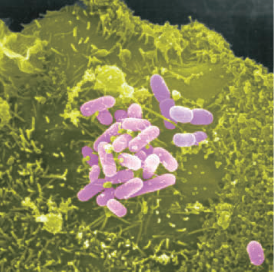
In order to discuss genetic and evolutionary principles, it’s first necessary to understand the basic functions of cells. Cells are the fundamental units of life in all organisms. In some life-forms, such as bacteria, the entire organism consists of only a single cell . However, more complex multicellular forms, such as plants, insects, birds, and mammals, are composed of billions of cells. In fact, an adult human body may be composed of as many as 1 trillion (1,000,000,000,000) cells, all functioning in complex ways that ultimately promote the survival of the individual. Life on earth began more than 3.5 billion years ago in the form of single-celled organisms(Prokaryotes), represented today by bacteria and blue-green algae. Structurally more complex cells, called eukaryotic cells, appeared approximately 1.2 billion years ago, and because they are the kind of cell found in multicellular organisms. Despite the numerous differences among various forms of life, it’s important to understand that the cells of all living organisms share many similarities because of their common evolutionary past. In this way, all living things are ultimately connected. In general, a eukaryotic cell is a three-dimensional structure composed of carbohydrates, lipids (fats), nucleic acids, and proteins. It also contains several kinds of substructures called organelles, one of which is the nucleus (pl., nuclei), a discrete unit surrounded by a thin membrane called the nuclear membrane. Inside the nucleus are two kinds of molecules that contain the genetic information that controls the cell’s functions.
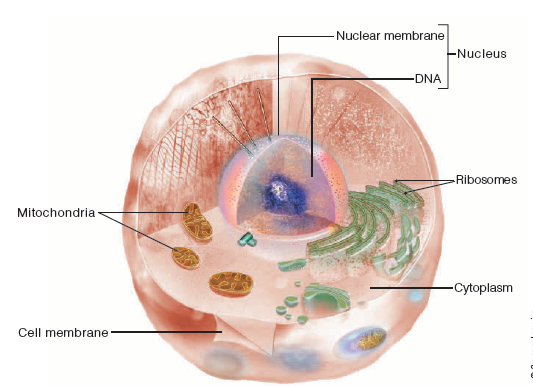
Actually, these two molecules, DNA (deoxyribonucleic acid) and RNA(ribonucleic acid), are fundamental not only to cellular activities but also to life itself. The nucleus is surrounded by a gel-like substance called cytoplasm, which contains many other types of organelles involved in activities related to the function of the cell and organism. These activities include breaking down nutrients and converting them to other substances, storing and releasing energy, eliminating waste, and manufacturing proteins through a process called protein synthesis.
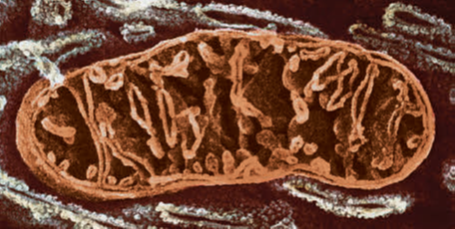
Two of these organelles, mitochondria (sing., mitochondrion) and ribosomes, require further mention. Mitochondria produce energy and can be thought of as the cell’s engines. Mitochondria are structures enclosed within a folded membrane and contain their own distinct DNA, called mitochondrial DNA (mtDNA), which directs mitochondrial activities. Mitochondrial DNA has the same molecular structure and function as nuclear DNA (that is, DNA found in the nucleus), but it’s organized somewhat differently. In recent years, mtDNA has attracted a lot of attention because of the traits it influences and because it can be used to study certain evolutionary processes. Ribosomes are partly composed of RNA. They’re important because they’re essential to protein synthesis.
There are basically two types of cells: somatic cells and gametes. Somatic cells make up the body tissues, such as muscles, bones, organs, and the brain. Gametes, or sex cells, are specifically involved in reproduction and are not important as structural components of the body. There are two types of gametes: egg cells, produced in female ovaries, and sperm cells, which develop in male testes. The sole function of a sex cell is to unite with a gamete from another individual to form a zygote, which has the potential of developing into a new individual. In this way, gametes transmit genetic information from parent to offspring.